Author:AliceDate:2026-11-9
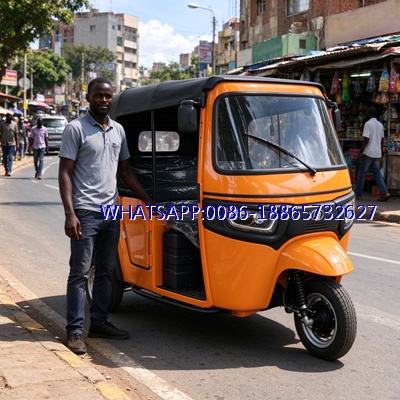
Assessment of Earnings and Business Potential for Electric Tuk-tuk Drivers in Africa
Based on the planning range in this report, electric tuk-tuks for passenger transport in selected cities of East and West Africa generate a gross daily revenue of USD 12–28. After deducting energy costs, routine maintenance, road & parking fees, installment or rent payments, downtime and contingency reserves, the driver’s disposable net income can be conservatively estimated at USD 4–13 per day. Vehicles owned outright on high-demand routes may achieve higher cash surplus, but this figure shall not be treated as guaranteed personal income.
Actual results depend on city, route, passenger flow, daily working hours, terrain, passenger load, power supply stability, charging / battery-swapping mode, vehicle ownership structure, local license regulations and spare parts availability. Importers, distributors, fleet operators and project buyers shall evaluate the full operation system instead of only comparing vehicle prices.
Core Data Overview
| Indicator | Range | Explanation |
|---|---|---|
| Daily Gross Revenue | USD 12 – 28 | Total passenger fare before vehicle & operation costs |
| Daily Direct Operating Cost | USD 2.40 – 8.20 | Energy / battery swap, maintenance, road & parking charges |
| Conservative Daily Disposable Income | USD 4 – 13 | After installments, rent, downtime and other deductions |
| Range Under Full Load | 80 – 120 km | Subject to load, terrain, temperature and driving conditions |
| Typical Refueling / Recharge Time | 8–10 hours for charging; 3–5 mins for battery swap | Subject to charger specs, battery design and local swap service |
Understanding Revenue Figures
Gross revenue means all passenger fares collected in one working day. Vehicle-level cash surplus = gross revenue minus electricity / swap fees, maintenance, parking and regular road expenses. Driver disposable income = cash surplus further minus installments / rent, insurance, license fees, tax, battery reserve, unexpected repair and loss from downtime.
This explains why some scenarios show higher returns than USD 13, while the conservative disposable income stays at USD 4–13. Higher figures apply to specific cost models and cannot be used as universal income promises for all cities and drivers.
Daily Gross Revenue by Operating Area
| Operating Area | Working Hours | Daily Gross Revenue | Operation Features |
|---|---|---|---|
| Core urban areas: Nairobi, Lagos, Accra etc. | 10 – 12 h | USD 18 – 28 | High passenger density, many short trips |
| Second-tier towns & suburban routes | 8 – 10 h | USD 12 – 18 | Lower order frequency, longer average trips |
These are estimated ranges, not market forecasts. Tariff control, traffic restrictions, rainy seasons, competition, safety conditions, fuel prices, exchange rates and local demand may greatly change outcomes.
Daily Operating Cost by Energy Refill Mode
| Cost Item | Home Charging | Battery Rental & Swap | Notes |
|---|---|---|---|
| Energy / Swap Service Fee | USD 1.00 – 2.20 | USD 3.00 – 5.50 | Swap cuts waiting time but requires service fees |
| Routine Maintenance | USD 0.60 – 1.20 | USD 0.60 – 1.20 | Brake, tyres and wearing parts inspection |
| Parking & Road Temporary Fees | USD 0.80 – 1.50 | USD 0.80 – 1.50 | Varies by route and local management rules |
| Total Daily Subtotal | USD 2.40 – 4.90 | USD 4.40 – 8.20 | Excluding installments, depreciation, tax and major repair |
Home charging delivers lower direct energy cost where power supply is stable overnight and safe parking is available. Battery swapping improves vehicle uptime, yet buyers must assess swap station coverage, queuing time, battery ownership, service pricing, contract terms and lock-in risks.
Financial Simulation by Vehicle Ownership
All cases below use a fixed daily gross revenue of USD 22 to show how installment and rental costs affect driver cash surplus.
| Business Model | Daily Gross Revenue | Direct Cost | Installment / Rent | Reserve | Daily Net Balance | 26-Month Net Balance |
|---|---|---|---|---|---|---|
| Outright purchase + home charging | 22.00 | 4.20 | 0.00 | 1.50 | 16.30 | 423.80 |
| Financed purchase + home charging | 22.00 | 4.20 | 3.80 | 1.50 | 12.50 | 325.00 |
| Leased vehicle + battery swap | 22.00 | 7.00 | 6.50 | 1.50 | 7.00 | 182.00 |
Outright ownership brings the highest daily cash surplus with no loan or rent, but owners still bear capital recovery, battery replacement, depreciation and major repair costs. Financing lowers initial investment, while repayment risks exist when demand drops. Leasing + battery swap reduces asset risk but squeezes driver profit significantly.
If we simply subtract USD 3.50 basic operating cost from USD 22 revenue, we get USD 18.50. This is operating contribution only, not final disposable income, before installments, rent, insurance, license, depreciation, battery replacement and downtime provisions.
Key Specifications for Commercial Passenger Tuk-Tuks
Motor Power & Frame Strength
For relatively flat urban routes, motors of 2000W and above are recommended under qualified load design. For hilly, bumpy roads or fully loaded routes, 3000W–4000W AC motors and reinforced frames are preferred. Low-power 1500W units may lack climbing power under full load and reduce trip volume & driver income.
Battery Type & Thermal Protection
LFP lithium batteries are preferred for high-frequency commercial operation, featuring longer cycle life and better thermal stability. Lead-acid batteries suit low-mileage routes with limited budget. Buyers shall compare capacity, weight, cycle life, warranty and replacement channels. Batteries for high-temperature markets must have BMS temperature monitoring and overheat protection.
Range: Use Full-Load Range Instead of Advertised Range
Common marketing range: 100–140 km. Commercial planning range under full load: 80–120 km. Full load, climbing, rough roads, high temperature, frequent acceleration, tyre pressure and battery aging all reduce actual range. Ask suppliers for full-load test reports stating load, average speed, slope, ambient temperature, battery capacity and test cycle.
Charging vs Battery Swap
Standard slow charging: 8–10 hours, suitable for overnight charging with reliable power. On-site battery swap: 3–5 minutes physical swap. Total downtime includes travel to station, queuing, account verification and battery availability. Fleet buyers shall calculate full service availability instead of only physical swap time.
Passenger Capacity & Brake Safety
Typical layout: 1 driver + 3 passengers. Selected certified models allow 4 passengers. Legal capacity depends on local certification & registration. Overloading lengthens braking distance, damages frame & suspension, accelerates tyre and battery wear, and may invalidate insurance or operation permits.
Compliance & Local Import Approval
Before ordering, confirm import eligibility, customs HS code, tariff, vehicle registration standards, passenger transport permit and route restrictions. Request certificate of origin, commercial invoice, packing list, bill of lading, specs, VIN / chassis info, battery shipping documents and test certificates required by local authorities.
Spare Parts & After-Sales Support
Controllers, motors, brakes, tyres, bearings, suspension, chargers and battery modules decide vehicle uptime. A low purchase price makes little sense if a controller failure cannot be replaced for weeks. The first order should include clear spare parts package, service manual, circuit diagram, diagnostic workflow and technical training.
Main Risks Affecting Return
| Risk | Business Impact | Buyer Action |
|---|---|---|
| Unstable Power Supply | Incomplete overnight charging stops operation | Assess grid stability, secure parking and charging shift |
| Battery Degradation in High Heat | Shorter range, early replacement cost | Confirm thermal protection & warranty; build battery stock |
| License & Route Restrictions | Import approved but operation not allowed | Get written local confirmation before shipment |
| Spare Parts Shortage | Long downtime from minor faults | Stock high-wear parts; confirm lead time |
| Installment / Rental Pressure | Fixed payment even with low demand | Cash flow stress test; negotiate grace terms |
| Exchange & Landing Cost Fluctuation | Change total return | Use landed cost model with clear exclusions |
| Closed Battery Swap Network | Service suspension, price lock or incompatibility | Check coverage, battery ownership and exit terms |
Checklist for Importers & Fleet Buyers
Confirm target country, city, route type, terrain, passenger load, daily mileage, charging mode, ownership model and order quantity.
Verify vehicle legal classification, registered capacity, route permit and commercial insurance requirements.
Compare performance under full-load test; do not use empty-load marketing range.
Compare home charging, station charging and swap by real grid reliability, swap coverage and downtime.
Calculate full landed cost: vehicle, battery, charger, spare parts, packaging, sea freight, insurance, duty, port fee, assembly and inland transport.
Confirm warranty, exclusion, claim process, spare part lead time, service documents and technical training in writing.
Run trial operation on typical routes, record consumption, range, downtime, failure rate and driver feedback.
Update full life-cycle cost model with trial data before bulk order.
Methodology & Limitation
The income and cost data are reference ranges compiled from operator surveys and public industry materials in 2026 for preliminary feasibility evaluation. This is not a formal wage survey and does not constitute profit guarantee. National policy, exchange rate, electricity tariff, transport fare, financing terms and supplier specs may change. Re-verify all assumptions for your target country and exact model before purchase.
Get Custom Quotation for Your Route
Please advise target country, city, route terrain, expected passenger load, daily mileage, charging / swap condition, ownership model and planned order quantity. Our export team will prepare customized spec sheet, spare parts scheme, sea freight estimate and distributor & fleet cooperation plan. Final price and performance assumptions depend on exact model and destination requirements.
Our tuk-tuks have already been exported to Nigeria and other African countries.
Hong Kong Bright Gal International Co.,Ltd (HKBG)