Author:AliceDate:2026-9-10
How to Choose Golf Cart Seats According to Climate
Hong Kong Bright Gal International Co.,Ltd(HKBG)
Most golf carts are parked outdoors, exposed to strong sunlight, rain and drastic temperature changes. Climate conditions vary greatly across regions. Hot and dry areas with intense sunshine, humid rainy regions, and coastal zones with salt spray will accelerate fading, cracking and peeling of seat leather, shorten service life and raise later renovation & replacement costs. With rich experience in supporting complete golf cart exports, HKBG shares how to select suitable seat leather for golf carts based on local climate.
1. High Temperature & Strong Sunlight Areas (Tropical, Subtropical and Arid Regions)
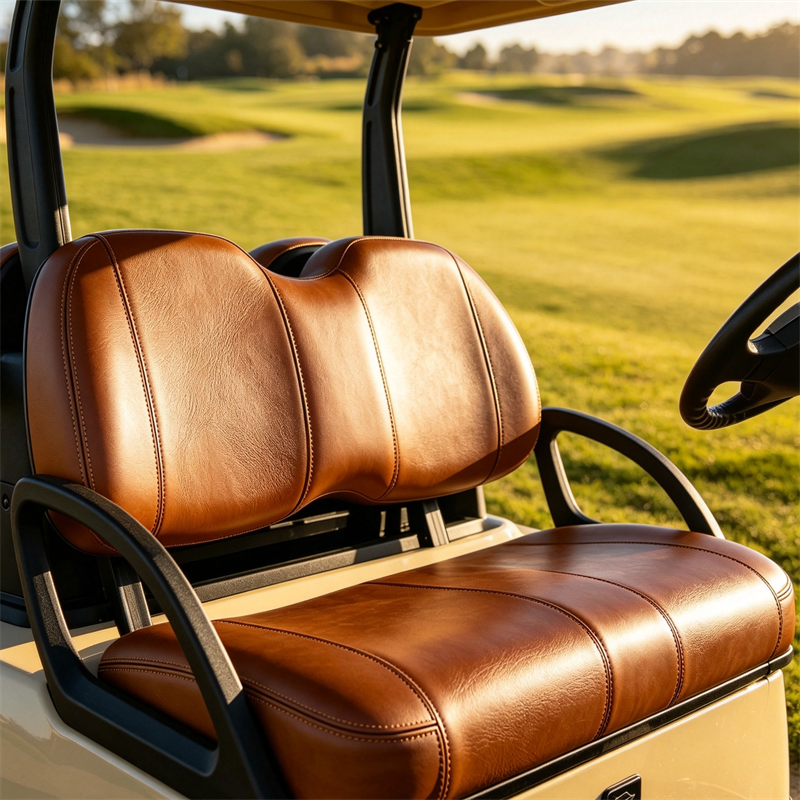
Intense UV rays and high surface temperature in summer are the main challenges here. Seat leather tends to turn yellow, fade and crack under high heat.
Key selection standard: Light resistance and heat resistance.
Our outdoor rubber-plastic synthetic leather is ideal for this scenario. It passes 125 cycles of light aging test with color change grade ≥4. After 500 hours of test under 90℃ environment, the surface remains intact. It resists yellowing and aging under long-time outdoor exposure. The material features breaking strength ≥500N and tear strength ≥40N. Even under repeated sitting and bumping in high-temperature conditions, seams are not easy to split.
2. High Humidity & Rainy Areas (Places with Plum Rain and Heavy Rainfall)
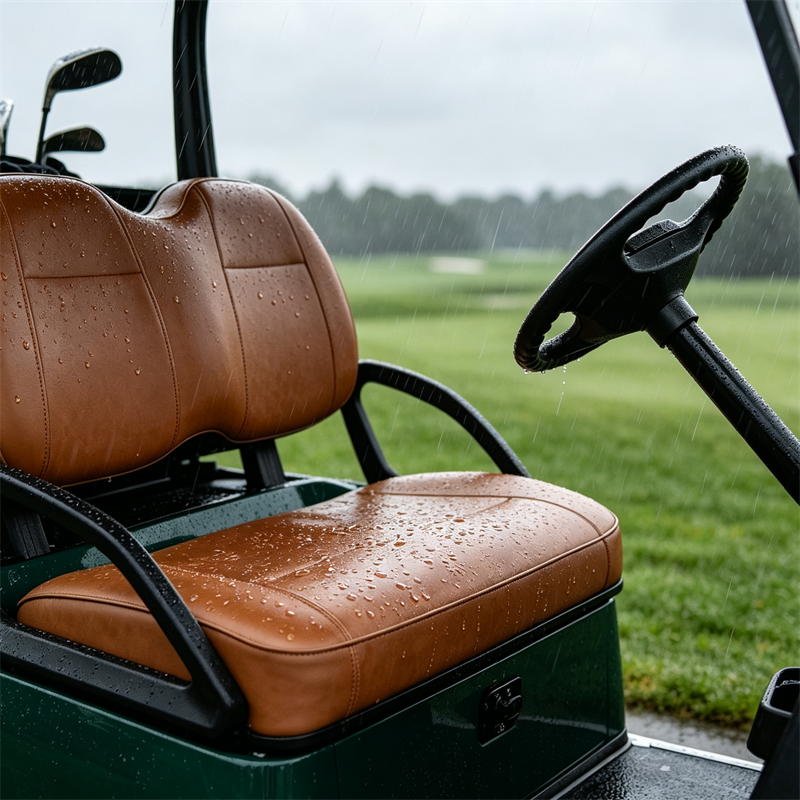
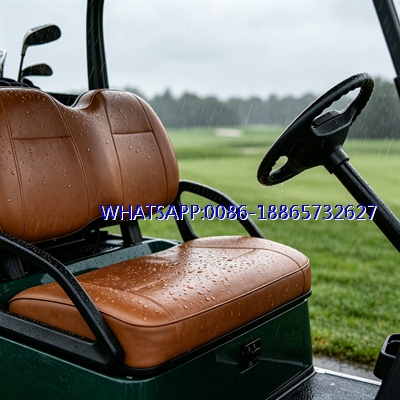
High humidity may cause hydrolysis, mildew, shrinkage, coating peeling and cracking of leather.
Key selection standard: Hydrolysis resistance.
Our rubber-plastic synthetic leather keeps free of cracking, shrinkage, damage or coating peeling after 10 weeks of test under 75℃ and 95% RH environment, coping with continuous humid weather. Its chemical resistance grade exceeds 4. Grass stains and sweat can be wiped off easily to reduce mildew growth.
3. Dry Courses with Heavy Dust & Friction
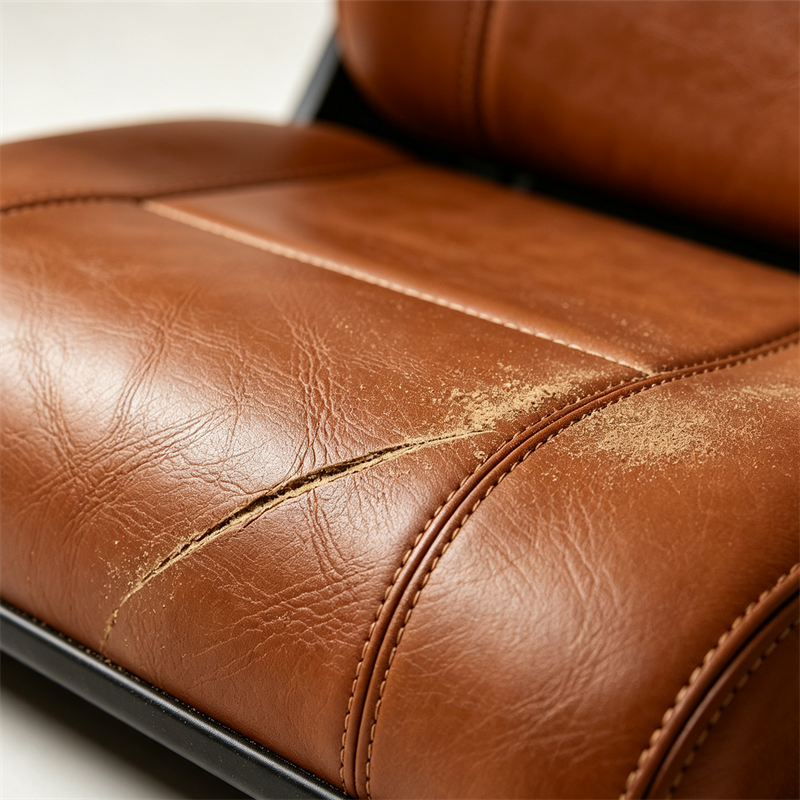
Dust on the golf course and frequent entry & exit will scratch and abrade the seat surface.
Key selection standard: Wear resistance and scratch resistance.
This leather passes multiple wear tests: Taber abrasion test at 5000 cycles to grade 4, Gakushin abrasion test of 15,000 times to grade ≥4, and Martindale abrasion test of 20,000 cycles with no more than 4 holes. The coating will not be worn through after heavy-load scratch test. It resists scratching and fuzzing from daily friction, extending the service life of seats.
4. Universal Additional Performance for Global Scenarios
Stable color fastness: Dry rubbing, wet rubbing, artificial sweat, alcohol, soap solution and gasoline tests all reach color change & staining grade ≥4. Sweat and sunscreen will not stain passengers’ clothes.
Safety & environmental protection: Flame retardant property meets US standard CA-LL7. Odor grade ≤3.5 after 2 hours under 80℃, no pungent smell inside the cabin. Restricted substances comply with ROHS and GB/T30512 standards.
Processing compatibility: Standard width 1400mm, customizable thickness. Seam strength ≥400N for non-perforated type and ≥450N for perforated type, matching various golf cart seat patterns.
HKBG Purchasing Tips
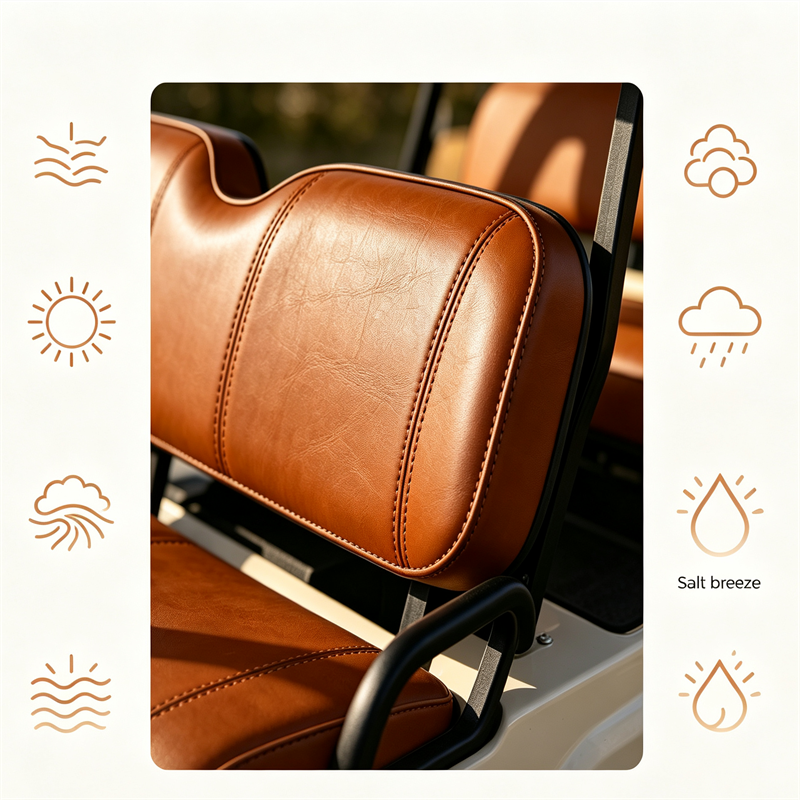
When selecting leather for golf cart seats, appearance and hand feel alone are not enough. Light resistance, hydrolysis resistance and wear resistance are three core outdoor indicators. Please check complete test reports during procurement and avoid the mistake of judging materials only by appearance.
HKBG specializes in exporting new energy low-speed vehicles. We provide customized golf cart seat solutions for different climates worldwide. Whether in hot arid zones, humid rainy areas or coastal locations, we deliver durable seat solutions to cut customers’ later maintenance and replacement costs.
This article can be further optimized for overseas social media release, and the work task mode can help polish titles, adjust paragraph length and match picture descriptions. Do you want to use it?
↓Next [ Overseas Clients from Multiple Countries Visit HKBG Factory for Inspection, Deepening International Cooperation for Common Development ]